SUMMARY
We improved and modernized the digital platform behind the Balance Social, the leading social audit campaign in Spain’s social and solidarity economy (SSE).
We built a new version that’s easier to fill out and maintain, runs on free software, and is ready for other networks to adopt. More than 700 organizations use it every year, and the OECD and the European Commission feature it as a reference case in their guide to measuring the impact of the social economy.
PROJECT DETAILS
Clients:
REAS, XES, Utrecht University
In collaboration with:
CoopDevs, Dabne
Area:
Social audit, Transparency
Services
Design, UX, development, maintenance
CURRENT STATUS
September 2026: the 2026 Balance Social campaign ran entirely on the new platform. We keep adding features with every new release.
FREE SOFTWARE STACK
Language
Framework
Python
Django
A tool that had outgrown its original purpose
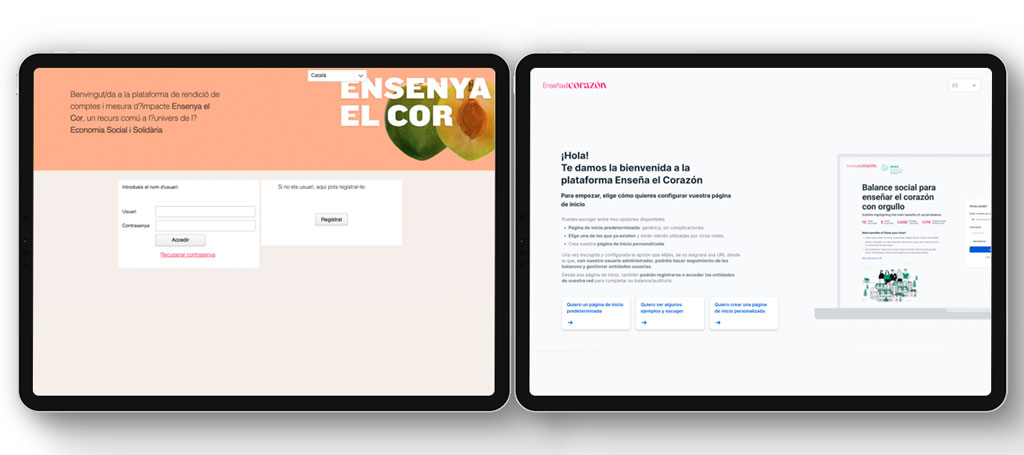
For more than ten years, the social and solidarity economy networks REAS and XES have run their annual transparency campaign, known as the Balance Social, with the help of Enseña el Corazón, a web app that collects social and environmental impact data from member organizations. The campaign has played a key role in strengthening the sector’s reputation, and its reach and participation have grown steadily over the past decade.

But that same growth exposed the limits of an app originally designed for a much narrower context:
- The user experience didn’t account for end users, who found filling out the Balance Social tedious and complicated.
- Maintaining the platform was getting harder and harder for admin teams.
- The app was hard to adapt to the changing needs of organizations and society.
On top of that, a single cooperative had built the app on its own custom codebase. This made the project dependent on a small technical team and held back adoption by other networks.
Simply put: Enseña el Corazón was crying out for a redesign that would modernize the app and make it work again.
User research before rewriting the code
At the request of XES and REAS, amoved took on the user experience redesign and front-end development (the part of the app people see). Throughout the project, we worked with our fellow cooperatives CoopDevs and Dabne, with academic support from Utrecht University.
Before rewriting any code, we spent several months understanding how people actually used the platform. We designed and tested prototypes to experiment with layout, flows and interaction. This helped us catch problems early, align expectations and avoid costly redesigns down the line.
As a result, we were able to:
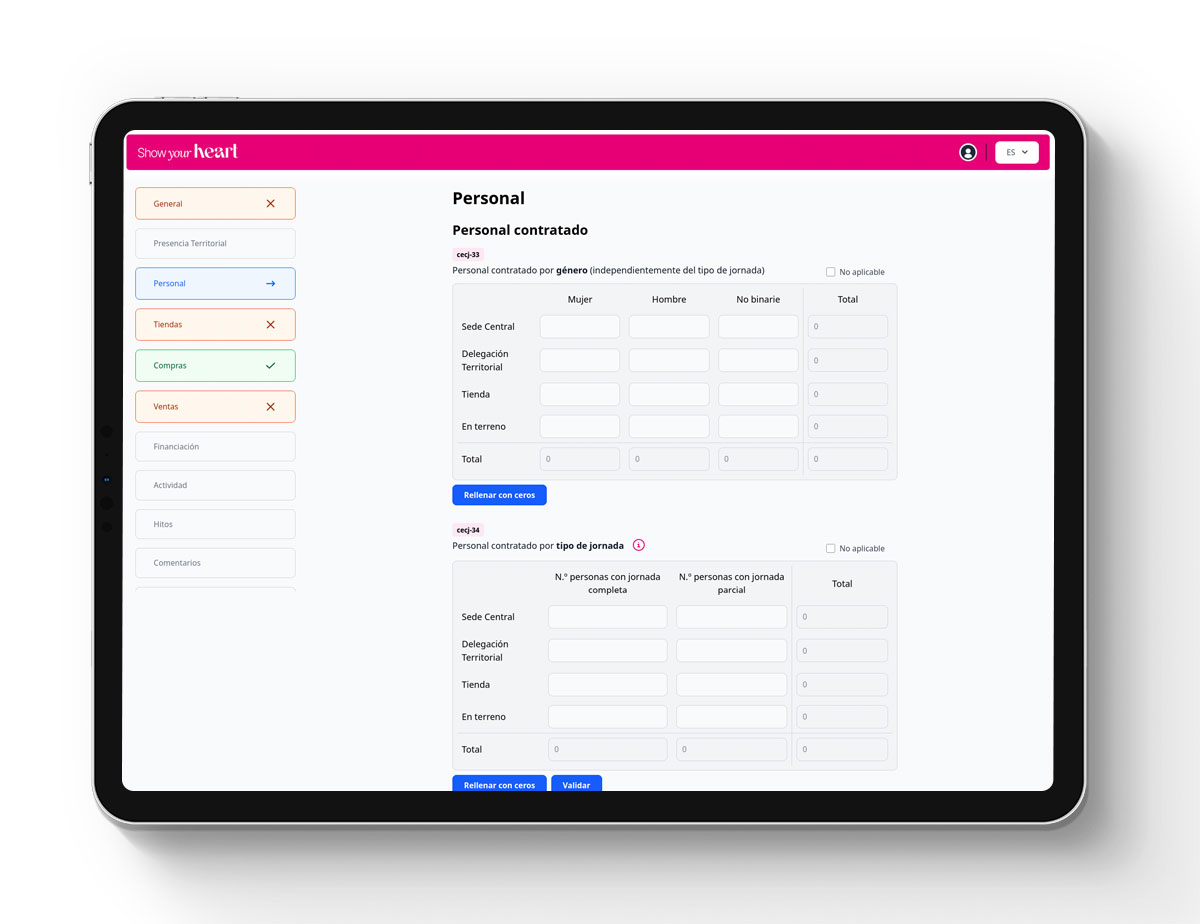
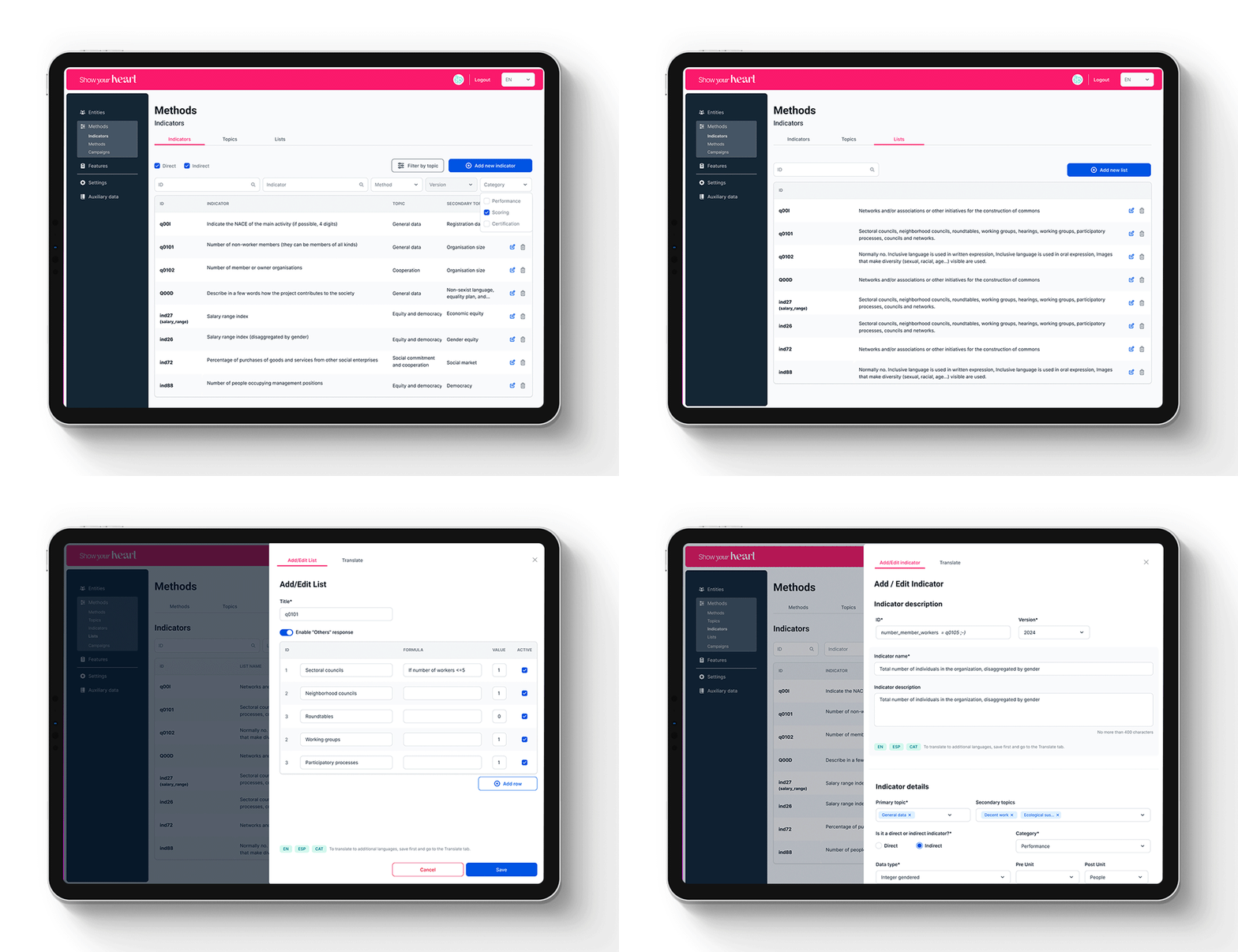
- Simplify the forms
- Make information and impact indicators clearer
- Restructure the Balance Social into an easier, step-by-step process
- Build a component-based design system so every part of the interface looks consistent and clear
Next, we carried out a full refactor of the software, improving the app’s internal structure:
- Modernized its architecture using one of the most widely used frameworks for web app development
- Improved performance, reliability and ease of maintenance
- Rewrote the code in Python and Django+
- Laid the groundwork for the tool’s future growth, making it easier for other networks to adopt
The code and the entire development coordination process now live in public repositories, so the whole community can get involved: report issues, request improvements or contribute code.
A social audit that’s easier to fill out, easier to maintain and open to other networks
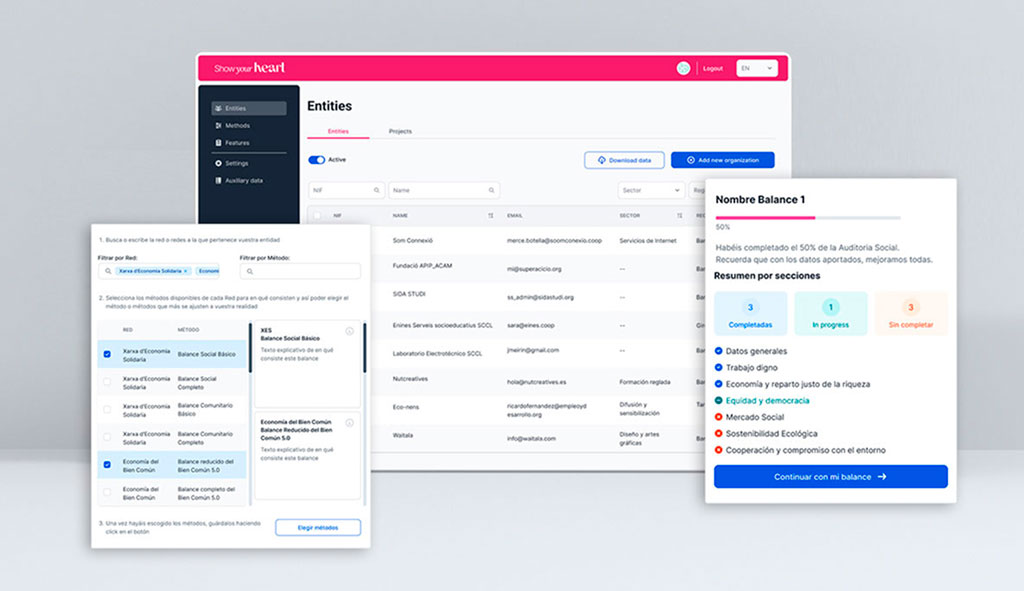
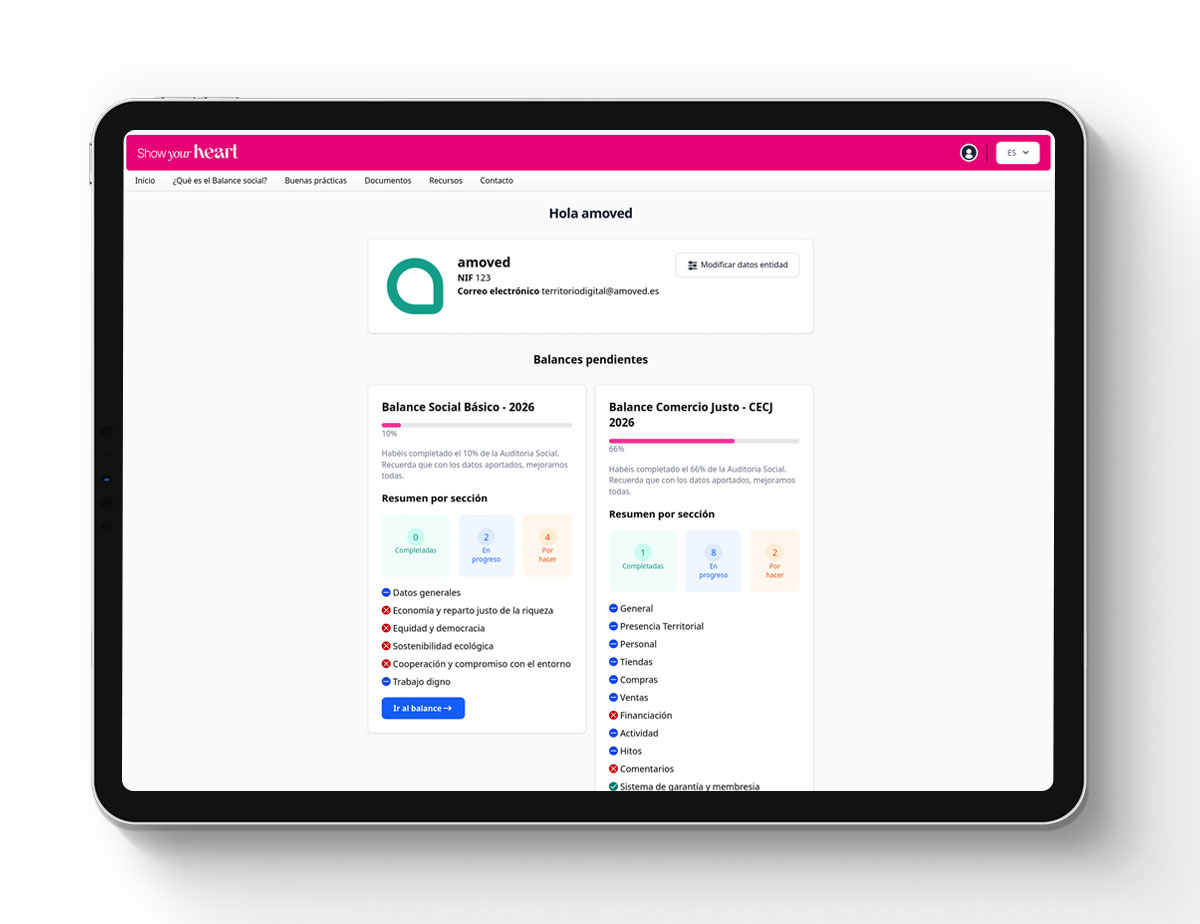
The new version of Enseña el Corazón, now called Show your Heart as a nod to its global reach, offers:
- A much smoother experience: reorganized forms and flows make the app easier to navigate and take up less of organizations’ time, so they can focus on understanding their social impact.
- A stronger, more inclusive, people-centered tool: designed around the real needs of the people who use it, and grounded in the community and cooperation behind the whole initiative.
- Shared digital infrastructure: free software and copyleft licenses let the project keep evolving and adapting to new needs.
Since then, we’ve helped other networks roll out Show your Heart to strengthen their transparency and accountability systems, including Spain’s national Fair Trade network.
Is your app falling behind?
Tell us what’s not working and we’ll suggest some alternatives.
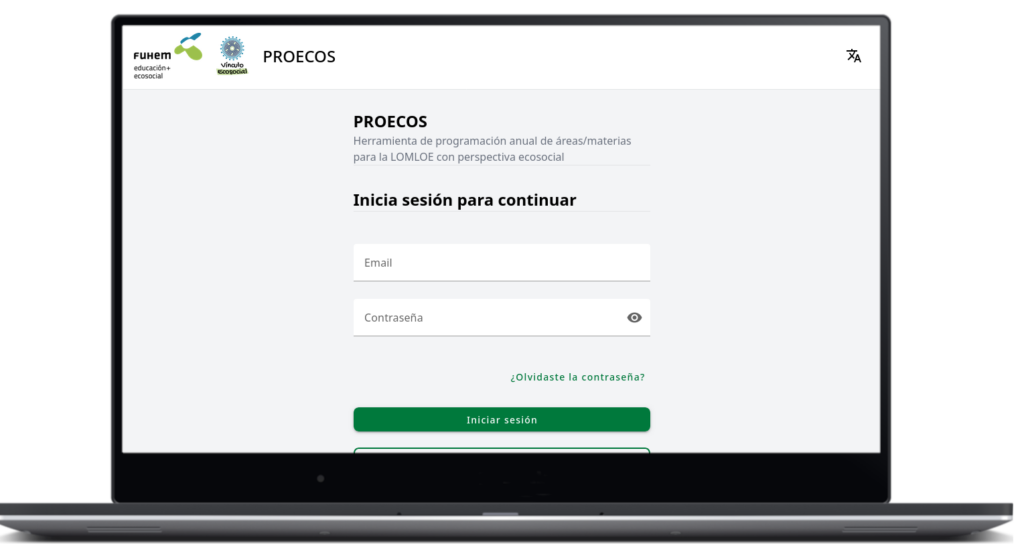
Similar case studies: Fair Trade’s social audit and PROECOS, FUHEM’s curriculum planning app.