
PROJECT SUMMARY
We used web scraping to support research into the systemic risks posed by major online pornography platforms. The work was part of the GRACE project, funded by the European Commission, in collaboration with a European research team led by digital justice researcher Silvia Semenzin.
PROJECT DETAILS
Client
GRACE Project, European Commission
Area
Academic Research, Digital Regulation, Human Rights, Digital Rights
Services
Data extraction and organization (web scraping), Technical consulting
RESULTS
- Key platform data collected through web scraping
- Time and resources saved for the research team
- Faster analysis thanks to clean, structured data
- Evidence to help identify patterns linked to potentially illegal content
FREE SOFTWARE STACK
Languagye
Main Library
Python
Scrapy
Online pornography and gender-based violence
In summer 2024, Silvia Semenzin, a researcher committed to digital justice, reached out with an urgent and socially significant challenge. She was leading a research project to assess the systemic risks of major online pornography platforms under the European Union’s Digital Services Act (DSA), one of today’s most important digital regulations. The goal was to determine whether these platforms complied with European rules on digital violence against women, human trafficking and sexual exploitation.
The research combined methods such as user experience analysis and digital ethnography to produce evidence-based policy recommendations for the European Commission. But the team faced a critical obstacle: collecting the digital data required technical skills they didn’t have in-house.
Without experienced support, data collection would have taken many hours and put other key parts of the project at risk. That’s when Silvia called us.
Web scraping for research data collection
From the start, we shared the project’s values and understood the technical challenge of dealing with huge, often opaque platforms. Silvia brought us on board thanks to the trust we had built through earlier collaborations on digital commons projects.
“What I value most about amoved is their sensitivity and their ability to understand the project’s goals. They’re also punctual, organized and precise.” — Silvia Semenzin
After the first call, we structured the collaboration into three clearly defined phases:
1. Understanding the project: we met with Silvia to understand priorities and define the scope of work. Based on these conversations, we designed a work plan built on web scraping: extracting information from websites automatically and efficiently.
2. Technical implementation: to collect the data, we developed custom tools (called scripts) that let us extract the necessary information from the platforms in a structured way while respecting their technical limits. This work included:
- Collecting the tags and categories visible on the platforms’ home pages.
- Extracting data on the number of videos associated with key terms, which made it possible to identify patterns and trends.
- Organizing all the information in CSV files, a simple and accessible table format.
These tools not only saved the team time but also ensured the data was consistent and reliable.
3. Delivering results: we handed over the data in a clear, organized format, which let the team focus on analysis instead of tedious tasks, and draw conclusions based on real data.
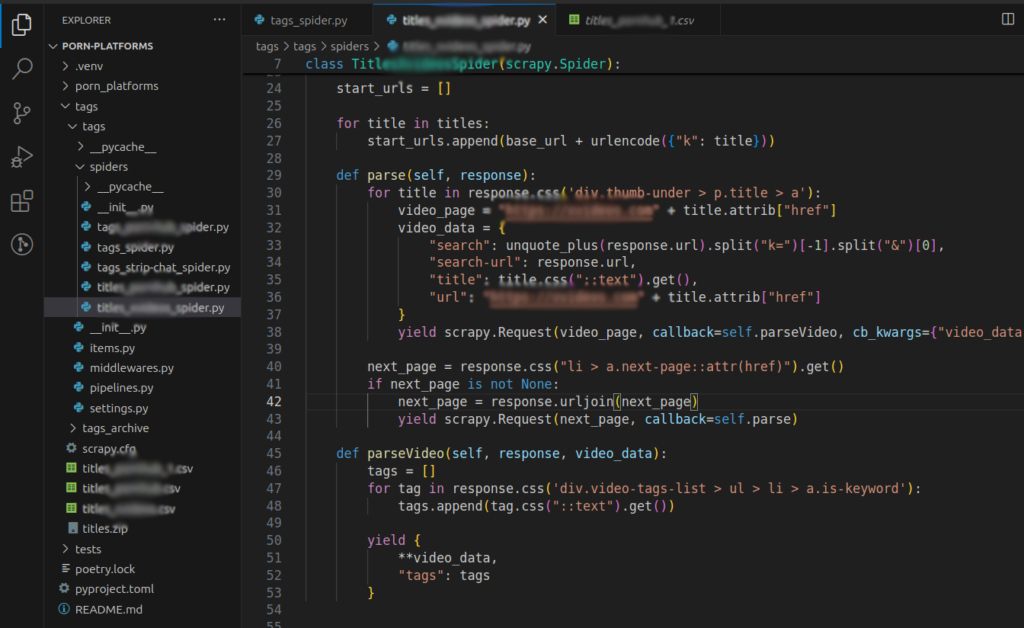
The image below shows the inner workings of one of the scripts we used to collect data from the platforms.
From data to public policy
Once we delivered the data, Silvia’s team ran an in-depth analysis and drafted its recommendations for the European Commission, working with lawyers, sociologists and journalists to interpret the findings. The results are confidential so as not to compromise the Commission’s decision-making, but you can follow us on LinkedIn to keep up with the project.
In our closing review with Silvia, we identified three ways our collaboration helped the project:
1. Better use of resources: the team saved time and could focus on its strengths: interpreting data and shaping recommendations.
2. Agile collaboration: we kept communication direct and smooth, with no unnecessary meetings.
3. Key data: the results revealed patterns in content categories and their link to potentially illegal terms, providing evidence for the policy recommendations.
“I hope to have amoved on board from the start in future projects.” — Silvia Semenzin
Working hand in hand with interdisciplinary team is one of our strengths, and something we love doing. We provide technical solutions that complement each team’s expertise in areas such as:
- Specialized technical support: helping teams without IT staff overcome technical barriers
- Data engineering: collecting the information needed to assess trends, risks and more
- Data processing: turning messy databases into usable, accessible datasets