
PROJECT SUMMARY
We used web scraping techniques to support research into the systemic risks posed by major online pornography platforms. The work was carried out for the European Commission-funded GRACE project, in collaboration with a European research team led by digital justice researcher Silvia Semenzin.
PROJECT DETAILS
Organization
GRACE Project | European Commission
Area
Academic research, Digital regulation, Human rights
Service(s)
Data extraction and organization (web scraping), Technical consulting
RESULTS
- Collection of key data through web scraping.
- Time and resource savings for the research team.
- Streamlined analysis thanks to well-organized data.
- Support in identifying patterns linked to potentially illegal content.
FREE TECHNOLOGIES USED
Languagye
Main Library
Python
Scrapy
Online pornography and gender-based violence
In summer 2024, Silvia Semenzin, a researcher committed to digital justice, contacted us with an urgent and socially significant challenge. Silvia was leading a research project to assess the systemic risks of major online pornography platforms under the European Union’s Digital Services Act (DSA), one of the most important digital regulations today. The aim was to determine whether these platforms complied (or not) with European rules on digital violence against women, human trafficking and sexual exploitation.
The research, which combined methods such as user experience analysis and digital ethnography, aimed to put forward regulatory recommendations to the European Commission, grounded in solid data, to shape its public policy. However, the team faced a critical obstacle: collecting digital data required technical skills the team did not have.
Without the support of an experienced team, this task would take many valuable hours and put progress in other key areas of the project at risk. That’s when Silvia gave us a call.
Web scraping to collect the data
From the very beginning, we identified with the project’s values and understood the technical challenge Silvia and her team faced in dealing with huge and often opaque platforms. Silvia invited us to take part thanks to the relationship of trust we had built through previous collaborations on digital commons projects.
“What I value most about amoved is their sensitivity and their ability to understand the project’s goals. They’re also punctual, organized and precise,” Silvia said when explaining why she chose to work with amoved.
After the initial contact, we structured the collaboration into three clearly defined phases:
1. Understanding the project: we met with Silvia to understand priorities and define the scope of work. Based on these conversations, we designed a work plan built on web scraping, a method for extracting information from websites automatically and efficiently.
2. Technical implementation: to collect the data, we developed custom tools (called scripts) that let us extract the necessary information from the platforms in a structured way while respecting their technical limits. This work included:
- Collecting the tags and categories visible on the platforms’ home pages.
- Extracting data on the number of videos associated with key terms, which made it possible to identify patterns and trends.
- Organizing all the information in CSV files, a simple and accessible table format.
These tools not only saved the team time but also ensured the data was consistent and reliable.
3. Delivering results: we shared the data in a clear, organized format, which let the team focus on analysis without losing time on technical tasks, and draw conclusions based on real data.
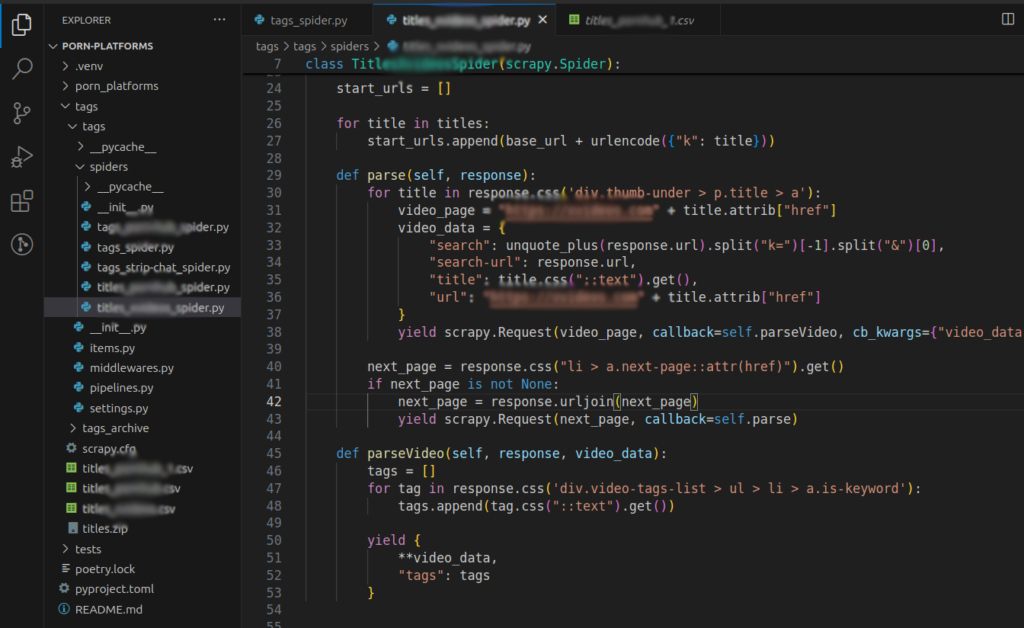
In the image below, we show you the inner workings of one of the scripts we used to extract information from the platforms. In the last section, we tell you about the results and our contribution to the research.
From data to public policy
After we collected and delivered the data to Silvia, her team carried out an in-depth analysis and drew up its recommendations for the European Commission. This work involved lawyers, sociologists and journalists, who interpreted the data and put forward concrete proposals. Although the results are confidential and not publicly available (so as not to compromise the Commission’s decision-making), follow us on LinkedIn if you’d like to keep up with the project’s progress.
In our evaluation conversation with Silvia, we identified three benefits our collaboration brought to the project:
1. Better use of resources: our work allowed the team to save time and focus on their strengths, such as interpreting data and formulating recommendations.
2. Agile collaboration: we kept direct, smooth communication with Silvia, avoiding unnecessary meetings and making the most of the time available.
3. Key data: the results made it possible to identify patterns in content categories and their relationship with potentially illegal terms, providing evidence for the regulatory recommendations.
“I hope to have amoved on board from the start in future projects,” Silvia told us. Working with Silvia and her team is always an enriching and motivating experience. It lets us apply our technical skills in an interdisciplinary context and support causes we believe in.
One of our strengths (and passions) is working hand in hand with interdisciplinary teams, providing technical solutions that complement their areas of expertise. Our flexible approach can be applied to:
- Specialised technical support: helping teams without IT profiles overcome technical barriers and meet their goals.
- Data engineering: collecting key information to assess trends or risks, among other things.
- Data processing: turning disorganised databases into usable, accessible datasets.